
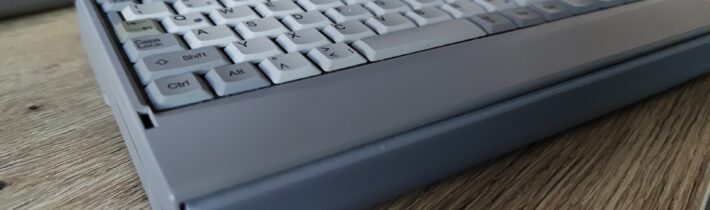
The Toshiba Libretto 50CT is one of those legendary ultra-portable machines that still has a cult following. Even decades later, it remains a beautiful piece of engineering. Unfortunately, like most retro laptops, the biggest failure point today is the battery.
Original Libretto batteries are almost always dead. And while repacking is technically possible, the stock enclosure creates a frustrating limitation: modern 18650 cells don’t fit.
This article explains how I solved that problem by designing a custom 3D printable battery enclosure that reuses the original battery electronics while housing modern 18650 cells.
The problem with original Libretto batteries
If you open a Libretto 50CT battery pack, you’ll find:
- aging cells with little or no capacity
- a compact plastic enclosure
- a battery management board (BMS) that still works fine
The BMS is the important part — it handles charging and safety. In many cases, it’s perfectly reusable.
The challenge is space.
Modern high-quality 18650 cells are slightly larger than the original cells used in the Libretto. Even small dimensional differences matter inside a tightly engineered enclosure. Once you try to fit new cells, you quickly discover:
👉 the original case simply cannot close
👉 trimming the plastic weakens the structure
👉 the pack becomes unsafe or unreliable
So instead of forcing a fit, I decided to design a new enclosure from scratch.
Design goals
The replacement enclosure needed to:
- reuse the original Libretto BMS
- hold 3 standard 18650 cells
- maintain proper alignment with laptop contacts
- be strong enough for daily handling
- print cleanly on consumer 3D printers
- assemble without glue where possible
Most importantly, it had to look and behave like a proper battery pack — not a fragile prototype.
Reverse engineering the original pack
The first step was careful measurement.
I disassembled a dead battery and mapped:
- BMS mounting points
- contact position
- latch geometry
- external dimensions
- insertion rails
These mechanical interfaces are critical. Even small errors can prevent the battery from locking into the laptop.
Using calipers and test prints, I iterated several prototypes until the fit was precise and repeatable.
Designing for 18650 cells
18650 cells introduce new constraints:
- cylindrical geometry
- larger diameter
- required insulation spacing
- wiring clearance
The enclosure had to:
- cradle the cells securely
- prevent movement
- isolate electrical contacts
- allow safe routing to the BMS
I added internal channels for wiring and reinforced walls around stress points. The final design distributes pressure evenly so the enclosure does not flex when inserted.
3D printing considerations
The enclosure is designed for FDM printers and works well with:
- PETG (recommended)
- ABS
- high-quality PLA (light use)
Print orientation is important to maximize strength along the insertion rails. Layer direction follows the mechanical stress path to avoid snapping under load.
No exotic settings are required — this is printable on most hobby printers.
Assembly overview
Assembly is straightforward:
- Print enclosure parts
- Transfer original BMS from the old battery
- Install three 18650 cells
- Wire to original contacts
- Close enclosure
The design keeps everything aligned and secure without complicated fixtures.
The result is a modernized battery pack that restores real usability to the Libretto.
Why this matters for retro hardware
Vintage laptops fail not because of CPUs or screens — they fail because of batteries.
By creating replacement mechanical parts, we extend the lifespan of hardware that would otherwise become display-only collectibles.
This project is part repair, part preservation.
And it’s a good example of how 3D printing helps bridge the gap between obsolete components and modern parts.
Download the enclosure
If you want to rebuild your own Libretto 50CT battery, the printable enclosure model is available here:
👉 https://cults3d.com/en/3d-model/gadget/toshiba-libretto-50ct-18650-batteries-enclosure
The package includes printable files ready for production and assembly.
Final thoughts
The Libretto is too iconic to sit on a shelf with a dead battery. With modern cells and a printable enclosure, it becomes portable again — just like it was meant to be.
Retro computing doesn’t have to mean fragile museum pieces. With the right tools, we can keep these machines alive and usable.
And honestly, that’s half the fun.